

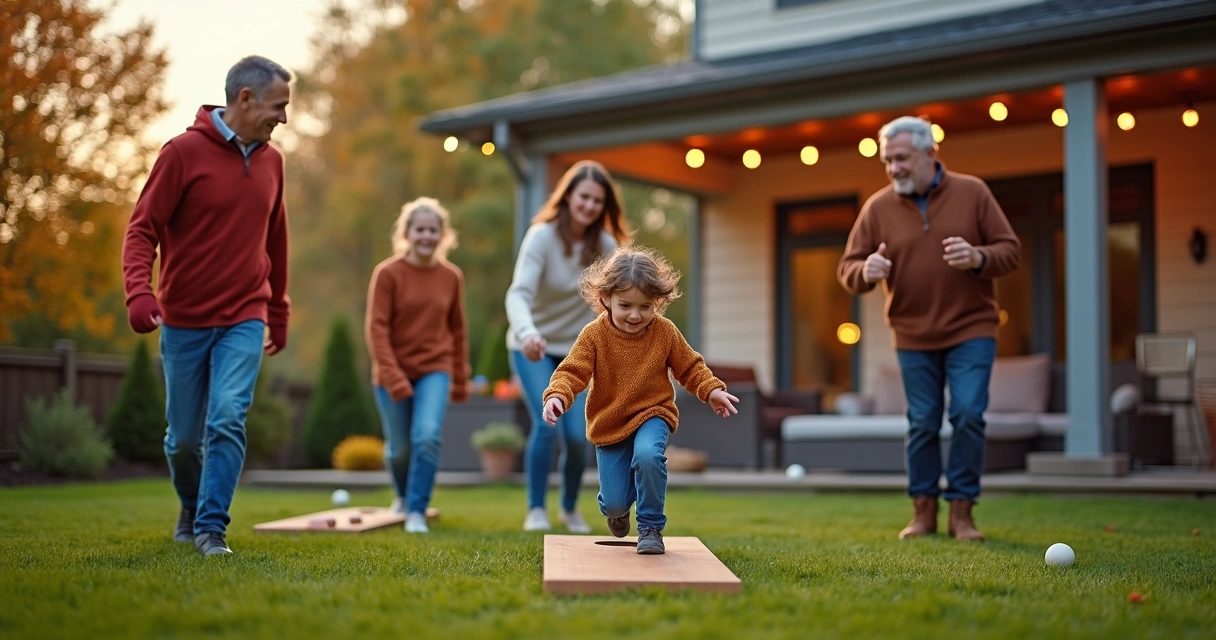
The turkey is carved, the pies are half-eaten, and the living room is starting to feel crowded. That familiar post-meal energy—kids full of sugar and adults full of food—needs somewhere to go. Thanksgiving outdoor games solve the problem better than another round of scrolling or forced conversation.
A short stretch of time outside resets the day. People laugh more, move more, and often create the moments that get talked about the following year. You do not need a professional sports field or specialized equipment. What matters is choosing activities that work for the actual group standing in your backyard or at the nearby park.
This guide focuses on practical, high-participation games that feel energetic without becoming overly competitive.
Why Movement Matters on Thanksgiving Afternoon
Sitting for hours after a large meal leaves most people sluggish. Light activity helps with digestion, lifts mood, and gives children a constructive way to burn excitement. Outdoor games also create natural mixing across ages. A grandparent who would never join a video game will happily toss a ball or keep score.
The best sessions last 20 to 40 minutes—long enough to feel meaningful, short enough that no one feels trapped.
Matching Games to Your Group and Space
Before choosing activities, run through three quick filters:
- Available space (open yard, driveway, park, or tight patio)
- Age and ability range
- Desired intensity (all-out running versus standing games)
Once those are clear, the right options become obvious.
High-Energy Games for Open Spaces
When you have room to move, these classics deliver the most laughter.

Modified touch football Use a soft football and keep the rules simple: two-hand touch, limited downs, and short fields. Mixed-age teams work best when you pair stronger runners with younger or less mobile players. The game ends when people are breathing hard and smiling.
Capture the Flag variations Divide into two teams, set clear boundaries, and use two distinct objects as flags. For younger children, create a smaller “safe zone” version. Adults can play full-speed while still watching out for little ones.

Relay challenges Set up three or four stations. Examples include:
- Balancing a small pumpkin or soft ball on a spoon
- Running with a partner in a three-legged style
- Carrying a light object between cones
Keep the relays short so everyone stays involved.
Games That Work in Smaller Spaces
Not every home has a big lawn. These options thrive on driveways, patios, or compact yards.

- Cornhole or bean-bag toss – Adjust the distance for different skill levels. Younger players stand closer; adults can compete from the full range.
- Ladder ball or ring toss – Easy to set up and gentle on joints.
- Basketball-style shooting games – If a hoop is available (even a portable one), try “HORSE,” “Around the World,” or simple free-throw contests. Soft outdoor basketballs work well on blacktop or grass.
- Balloon or beach-ball volleyball – A rope or even a folded towel between two chairs creates a net. The soft ball keeps the game friendly.

These activities allow people to join or step out without disrupting the flow.
Inclusive Games Built for Mixed Ages
The hardest part of holiday games is keeping both energetic kids and slower-moving adults engaged at the same time. These formats succeed more often than pure speed contests.

Team scavenger hunt Create two difficulty levels on the same list—one with pictures for younger children and one with written clues for older players. Items can be natural finds or objects you placed outside earlier.
Station-based obstacle course Use household items: chairs to weave through, a jump rope on the ground, a low cone to step over, and a final toss into a bucket. Make some stations optional so everyone can finish.
Passing and movement circles Players form a large circle and keep a soft ball or bean bag moving while answering light questions or calling out names. It looks simple but creates constant motion and inclusion.

Quick reference table:
| Space & Group | Best Game Fit | Intensity Level |
|---|---|---|
| Large yard + mixed ages | Capture the Flag or relays | Medium to high |
| Driveway or patio | Cornhole, ladder toss, shooting games | Low to medium |
| Park or open field | Touch football or scavenger hunt | Medium |
| Very mixed mobility | Obstacle course with optional stations | Adjustable |
| Mostly adults | Cornhole tournament or light football | Low to medium |
A Ready-to-Use 25-Minute Session Plan
Here is a simple sequence that works for most gatherings:
- Gather everyone and explain the plan in under one minute.
- Start with a five-minute warm-up toss or light relay so people loosen up.
- Move into the main game (touch football, Capture the Flag, or scavenger hunt) for 12–15 minutes.
- Finish with a calmer standing game such as cornhole or a shooting contest for the final 5–8 minutes.
- End together—group photo, water break, or a short walk back inside.
This structure prevents the common problem of games either fizzling too soon or dragging on until energy crashes.
Preparation That Takes Almost No Time
A small amount of advance work removes friction:
- Collect balls, bean bags, cones, or chalk into one bin the night before.
- Clear the main play area of obvious hazards.
- Have a few extra layers ready; temperatures can drop quickly in late afternoon.
- Decide on one “prize” system if friendly competition helps (stickers, bragging rights, or small treats).
- Identify a backup indoor movement option in case of sudden rain or wind.
Tips That Keep Things Fun Instead of Forced
- Announce the outdoor time clearly so people can transition mentally.
- Keep rules short. If explaining takes longer than playing, simplify.
- Let different people choose the next activity. Shared ownership increases participation.
- Watch for fatigue after the heavy meal—short breaks matter.
- Celebrate effort and completion more than winning.
- Put phones away for most of the session. The best moments happen when people are fully present.
- Stop while energy is still relatively high. Ending on a good note is better than one forced final round.
Conclusion
Thanksgiving outdoor games do not require perfection or special equipment. Their value comes from getting bodies moving, giving different generations a shared activity, and adding fresh air to a day that otherwise stays indoors.
Choose one or two games that match your space and the people present, keep the tone light, and let the afternoon unfold. The combination of movement, laughter, and open sky often becomes one of the most remembered parts of the holiday—more lasting than any single dish on the table.
Open the door this year. The best Thanksgiving memories are frequently the ones made outside.


.jpg)
.jpg)


.png)
.png)